Have you missed The Progger? My apologies, I did indeed fall off the grid this past fall, but hopefully I'll be back on a more regular basis in 2011.
A few things to end out 2010.....first, a greeting card from all of us at Assateague Coastal Trust:
Next - has it been cold enough for you this December? Well, here are some interesting blog postings from others that I think are worthy of re-posting for your reading pleasure. Next time you're putting up with someone who pooh-poohs 'global warming' or 'climate change' just pass these along.
FROM MIKE TIDWELL, OF CHESAPEAKE CLIMATE ACTION NETWORK:
All,
See below some helpful blog posts explaining the recent cold weather in North America and Europe in the context of global warming. Turns out, the vanishing Arctic ice is creating a phenomenon similar to a refrigerator door being left open. The cold air is filling up the whole room but the refrigerator itself is being emptied of its vital coldness. The process is utterly unsustainable and leading to disruption and loss for the whole house.
Mike Tidwell
Director, Chesapeake Climate Action Network
------------------------------------------------
From Eric Haxthausen of the Nature Conservancy:
The cold weather we have been experiencing on the East Coast is likely to sow further confusion in the minds of some Americans about whether the Earth is truly warming. I put together the blog post below to highlight some of the recent science about this, and thought it may be of interest. -Eric
http://change.nature.org/2010/12/15/with-all-this-global-warming-why-is-it-so-cold/
Well, this is why we now use the term climate change
http://www.nature.org/initiatives/climatechange/
Jeff Masters at the Weather Underground has a good post on what is happening with our weather that is making it so cold
http://www.wunderground.com/blog/JeffMasters/comment.html?entrynum=1710&tstamp=&page=1
And there is a good graphic at NOAA website that explains it.
http://www.arctic.noaa.gov/future/index_impacts.html
The explanation that is gaining currency among climate scientists is that low levels of Arctic sea ice during the summer are causing more heat to be absorbed in the Arctic during the fall, and changing atmospheric circulation patterns, driving cold Arctic air into Europe and the Eastern United States and funneling warm air up into the Arctic regions.
*This warm Arctic-cold continents pattern is likened to leaving the refrigerator door open. The room gets colder but the fridge warms up. *
This new pattern is very different from the one we are accustomed to. Case in point: the atmospheric circulation around the North pole actually reversed for a period of time last winter.
It also has the unfortunate byproduct that it generates a feedback loop that will tend to speed up warming, as it reinforces an atmospheric circulation that drives more warm air into the Arctic, melts more ice, allows darker land and water to absorb more sunlight, further warms the atmosphere in the Arctic, and thereby reinforces the new atmospheric circulation pattern.
So last night we had the unusual effect that the capital of Florida (Tallahassee) was colder (21° F this morning) than the capital of Greenland (with a low of 34° in the capital city Nuuk) or Iceland (43° in Reykjavik).
And as the globe continues to warm, we in DC and our counterparts in London might just need to get used to frigid winters.
*Eric Haxthausen is director of U.S. Climate Policy for The Nature Conservancy.*
Tuesday, December 21, 2010
Saturday, August 21, 2010
MRS. CLEAN GETS RID OF DIRT AND CRIME
FOR IMMEDIATE RELEASE
PRESS CONTACT: COASTKEEPER, BERLIN MD
Ocean City, Maryland (EPI)- Coastkeeper Kathy Phillips, responding to criticism that she should, "stop suing people and just clean up the water," has announced an aggressive new campaign of water cleanup.
Noting the continued problems of agricultural, residential and industrial runoff, Phillips commented that, "It really is time someone rolled up their sleeves and cleaned up this filthy, filthy mess." Initially the cleanup will begin with the coastal bays surrounding Assateague Island, "They're the most accessible, I can wade right out and scrub away."
The cleanup campaign is not without its problems, however, with Phillips noting that, "This whole tide thing has me absolutely flummoxed. I no sooner scrub a section of the bay than it drifts off one way or the other and I can't really tell where I left off."
No matter, Phillips is known for her determination, adding, "If I can be accused of singlehandedly destroying the agriculture industry on the Eastern shore, this job should be a cakewalk."
(Photos courtesy of Environmental Press International)
PRESS CONTACT: COASTKEEPER, BERLIN MD
ASSATEAGUE COASTKEEPER LAUNCHES AGGRESSIVE BAY CLEAN UP EFFORT
Ocean City, Maryland (EPI)- Coastkeeper Kathy Phillips, responding to criticism that she should, "stop suing people and just clean up the water," has announced an aggressive new campaign of water cleanup.
Noting the continued problems of agricultural, residential and industrial runoff, Phillips commented that, "It really is time someone rolled up their sleeves and cleaned up this filthy, filthy mess." Initially the cleanup will begin with the coastal bays surrounding Assateague Island, "They're the most accessible, I can wade right out and scrub away."
The cleanup campaign is not without its problems, however, with Phillips noting that, "This whole tide thing has me absolutely flummoxed. I no sooner scrub a section of the bay than it drifts off one way or the other and I can't really tell where I left off."
No matter, Phillips is known for her determination, adding, "If I can be accused of singlehandedly destroying the agriculture industry on the Eastern shore, this job should be a cakewalk."
#####
(Photos courtesy of Environmental Press International)
Thursday, July 29, 2010
Jaws
The Natural Resources Defense Council released their 2010 "Testing The Waters" swimming beach water quality report yesterday, July 28, and that got me thinking about our Coastal Bays. NRDC's 'Testing the Waters' annual report is based on water quality data reported by municipalities and counties throughout the country, data that is required to be reported by the EPA for any entity that receives federal funding through the 'Clean Beaches Act' to be used for water quality monitoring.
Ocean City, which received a four star rating (out of a possible 5 stars) from the NRDC has a unique situation regarding its swimming beaches and the quality of the water its visitors swim in.
In California, New York, and indeed many Maryland swimming areas, stormwater runoff drains to pipes that empty into the same water body people are swimming in. After a rainfall, a lot of those swimming areas are closed because of high bacteria levels.
Ocean City, on the other hand, dumps all of its stormwater runoff straight into the bays, so its oceanfront beaches remain protected.
No wonder, year after year, Ocean City gets to claim it has the cleanest beaches in Maryland. Yet thousands of visitors to Ocean City and Worcester County also swim, fish and recreate in the water of the bays and creeks behind Ocean City, without knowing what the quality of the water is from week to week.
Remember the movie "Jaws?" The movie was set in Amity - A town so dependent on tourism the town fathers decided it was ok to let the big white shark pluck a few juicy tourists off their inflatable mats from time to time rather than announce the problem and shut the beach down.
So how would you feel if you knew the beach towns all over the country were doing the same thing? OK, so it's not sharks and the danger may be more related to skin rashes and ear infections, but the fact still remains that _______________(insert the name of your local beach here) doesn't want anyone to know that the water might contain any type of hazard.
When I announced the Assateague Coastkeeper's "Swimmable Bays" program for the summer of 2010 you would have thought I was standing on the bridge screaming "Sharks!" at every passing car. No one actually wanted to know just how swimmable the waters of our Coastal Bays are. In fact, one business owner actually said, "Don't test the water near me, you'll put me out of business."
Worcester County regularly monitors the swimming pier at Public Landing for bacteria levels. Bacteria levels in 2006 exceeded EPA swimming beach standards so many times, Worcester County made the Natural Resources Defense Council's "Testing the Waters" list of worst swimming areas in the State of Maryland.
The county had known there was a problem in the water at Public Landing for years. Besides a small community of homes on aging septic systems with non-existent nutrient reduction technology, the worst offender seemed to be the large paved parking lot, that attracted seagulls and dogs, drained all rainwater runoff directly into Chincoteague Bay right next to the pier.
The county had been sitting on plans (and funding) to retrofit the parking lot storm drains with filters and install a vegetative buffer between the lot and the bay, but had relegated the work to the bottom of the to-do list. With pressure from the Coastkeeper and the funder after the release of the NRDC 2007 report the work was finally completed in 2008 and current testing by the county shows a marked reduction in unsafe bacteria levels in 2009.
State regulations only require Worcester County to monitor bacteria levels at 'public swimming beaches' and in the entire Coastal Bays watershed, only the pier at Public Landing is considered a 'public swimming beach.' In 2009 the County also began to monitor the water in Sinepuxent Bay adjacent to The Castaways Campground. Ocean City monitors the ocean swimming waters along their shoreline, and the State Park and National Park Service monitors their oceanfront shorelines.
Yet every summer, thousands of people swim or recreate in the waters of Herring Creek, Turville Creek, the St. Martin River, and Isle of Wight, Assawoman and Sinepuxent Bays. Kids are towed on floats, people jet ski or waterski, private campgrounds provide private swimming beaches in these waterways. Not exactly a 'public swimming beach', but these ARE our local water holes, after all.
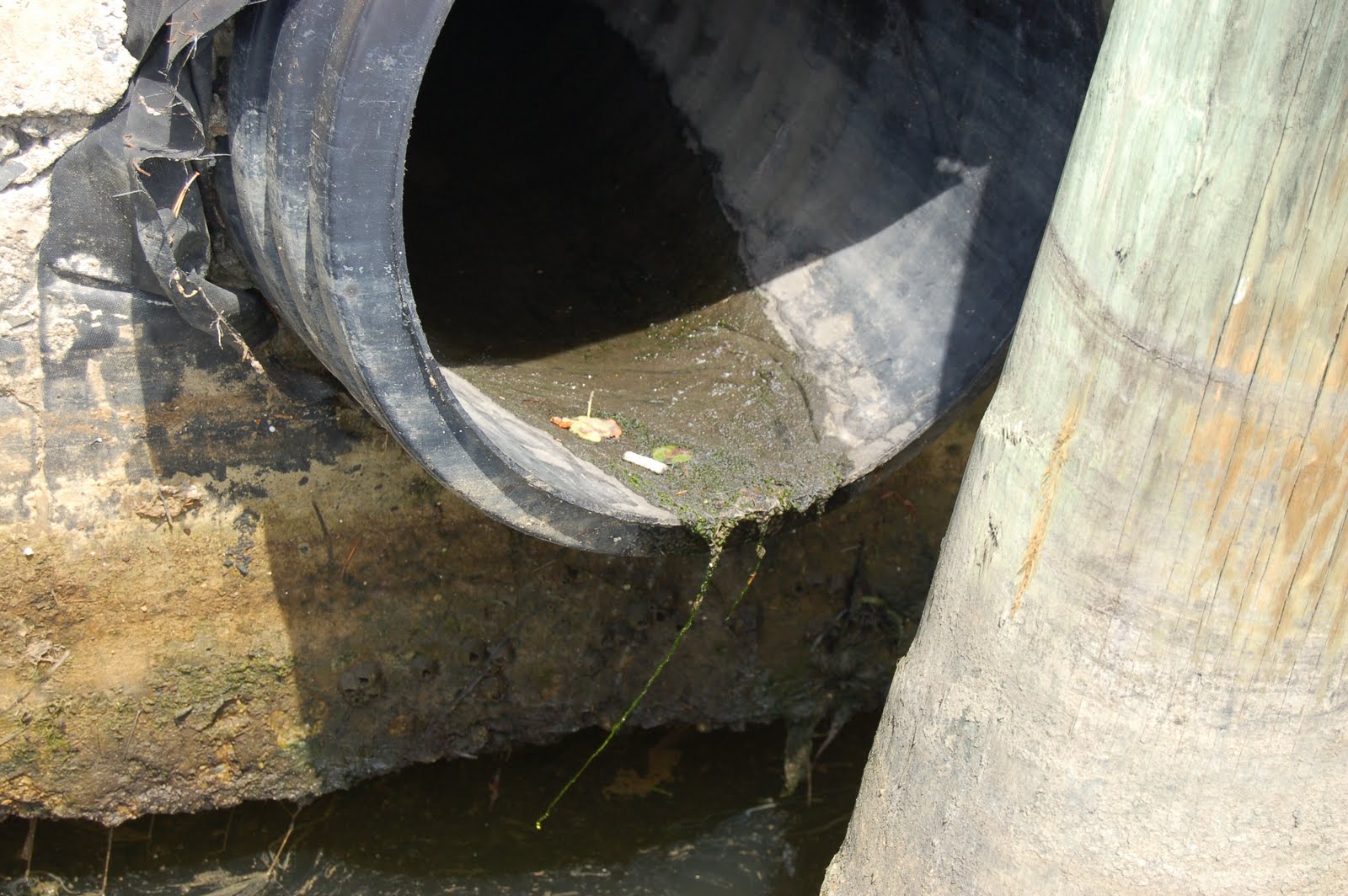
Interestingly, all of Ocean City's stormwater runoff from streets, parking lots, roof-tops, storage lots drains straight into Isle of Wight and Assawoman Bays. None of this chemical/oil/bacteria/trash laden soup flows into the ocean waters off OC's pristine beaches. Lucky for Ocean City! If their stormwater drained to the ocean side, like so many other coastal towns, mandatory testing would cause swimming beach closures after heavy rainfalls.
Oddly, I don't actually expect to find the bay waters to be in bad shape, my expectation is that, except for a few places where there are problems related to things like lawn runoff or street runoff after storms, the bays will test out pretty well.
But who will know unless someone does this monitoring? My project has been funded by the Community Foundation of the Eastern Shore and other private funders. I've taken EPA and State courses on water sampling protocols. The actual analysis will be done at a lab, and I had hoped to partner with Salisbury University's lab for that part of the project.
However, even after a successful presentation of my project to the lab's directors and a plan ready to execute I found myself back to square one after the Directors of the SU lab informed ACT they would not be able to do the project with us. (** see my added comment, below.)
And while I was assured it had nothing to do with the fact the lab is also partially funded and used by MDE for a source tracking project, it did make me realize this might have put them in an awkward position since my main objective over the last two years has been to attempt to get MDE to actually do the job they are charged with. Waterkeepers Chesapeake and Coastkeeper have been taking MDE to task for lax enforcement of state discharge permits and our legal challenge against MDE's poor administration of construction site stormwater management permits was settled with MDE improving many aspects of that program.
My "Swimmable Bays" project may have a delayed start this summer, and it may take on a different scope, but it will happen thanks to additional private funding to help pay for lab analysis of the samples.
Of course I'll be making this information public by posting to the Assateague Coastkeeper's website. Look for the launch of the Coastkeepers' 'Swimmable Bays' pages at www.assateaguecoastkeeper.org soon!
Just expect a typical response from business and government, "Pay no attention to that mangled corpse. It was just a boating accident!"
Sunday, June 6, 2010
Pancake Syrup and BP
This morning Jeff came back from surfing with a hunger for pancakes, so I was forced into domestic duties at the kitchen counter which was actually a nice respite from my preparations for the annual Waterkeeper conference this coming week.
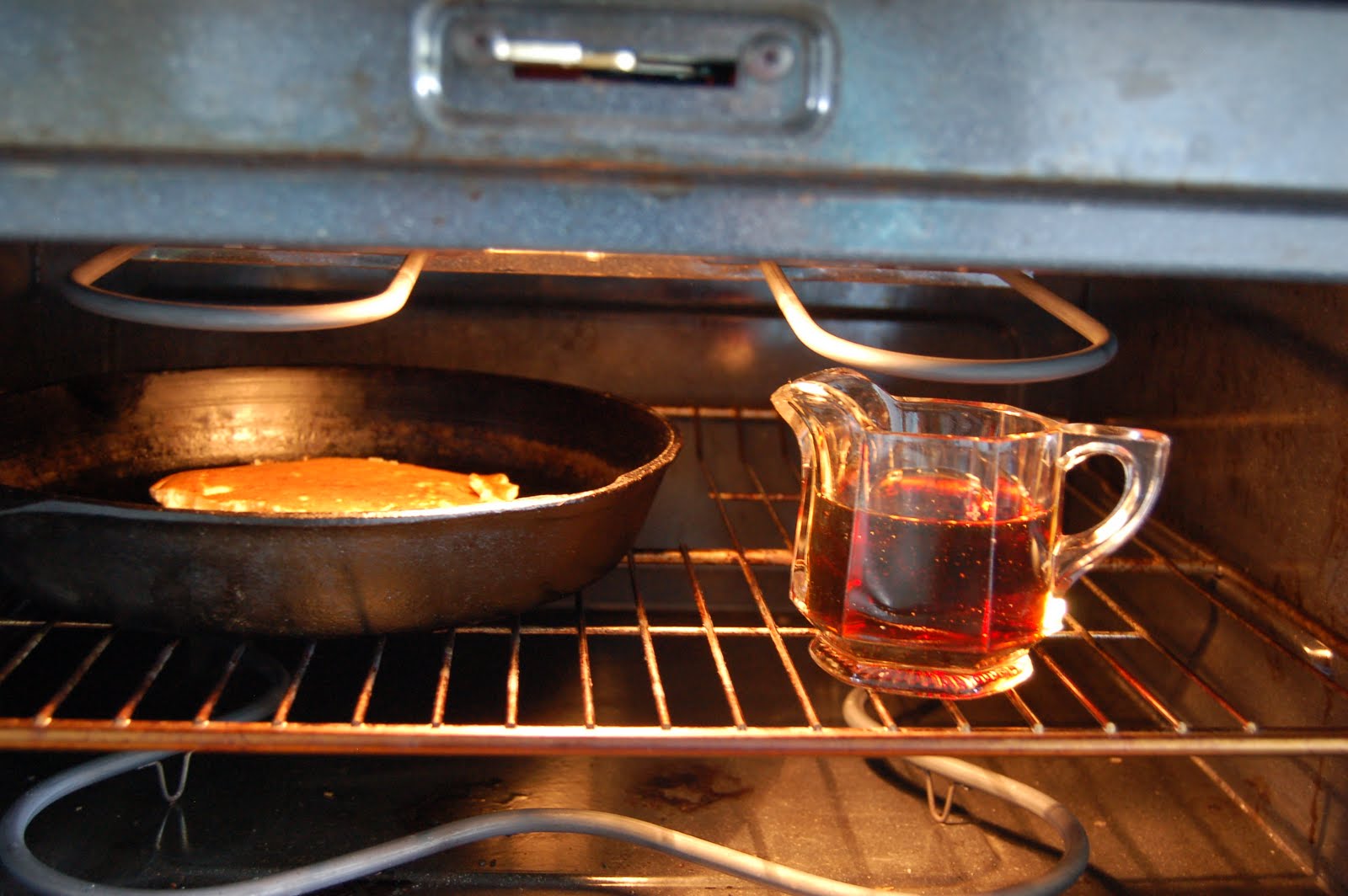
He walked in as I was keeping pancakes warm in the oven while cooking more on the stove top. "You're warming up a pitcher of pancake syrup in a hot oven without a saucer under it? What? Do you work for BP??," my husband said to me in a pretty irritated voice.
He was extremely upset that I had obviously given no thought as to what would happen if all the syrup spilled in the hot oven.
And I have to admit, he's right. What a mess that would be. It would be impossible to clean it up. I'd have a ruined oven on my hands, and there's little room in our budget to replace the appliance, so my only option would leave me with many, many hours to clean the oven by hand, scrubbing, dismantling, and in the end have to leave much of the syrup in there, to eventually burn away (while smoking up the house and affecting taste of food cooked in the oven.)
And so our breakfast conversation was dominated by the BP oil catastrophe in the Gulf of Mexico.
I deal with the consequences of unenforced environmental laws and lack of government oversight on a daily basis. So what has happened in the Gulf does not surprise me in the least. It was only a matter of time.
But I'm still plenty angered. At least now the rest of the country is getting a quick education into how those who are supposed to protect us spend most of their time looking for ways to circumvent environmental assessment procedures, dream up waiver schemes to weaken environmental regulations, and oh, so easily give in to industry lobbyists.
They do all this with absolutely no 'what if' contingency plans in place. In this country, heck even here in Maryland and my own local county, action is ONLY taken when there is a crisis. Those of us in the community who ask our officials to be pro-active are usually scoffed at with attitudes like "why scare the public?....we'll deal with it when it becomes necessary…we don't have the resources to do this."
What is frustrating is that whenever someone suggests that industry should be watched or regulated, there is always some fool "standing up" for the business community. I think that those of us who call for regulation understand better than anyone else that the bottom line drives business decisions. Regulation is the only thing that will keep business from feeding our pets poisoned food, our children poisoned baby formula, giving our children toys painted with lead based paint, or feeding us food tainted with e-coli, salmonella, or mad cow disease.
Some statistics about the environmental infrastructure of the State of Louisiana (from the NWF):
(AP Photo/
Charlie Riedel)
He walked in as I was keeping pancakes warm in the oven while cooking more on the stove top. "You're warming up a pitcher of pancake syrup in a hot oven without a saucer under it? What? Do you work for BP??," my husband said to me in a pretty irritated voice.
He was extremely upset that I had obviously given no thought as to what would happen if all the syrup spilled in the hot oven.
And I have to admit, he's right. What a mess that would be. It would be impossible to clean it up. I'd have a ruined oven on my hands, and there's little room in our budget to replace the appliance, so my only option would leave me with many, many hours to clean the oven by hand, scrubbing, dismantling, and in the end have to leave much of the syrup in there, to eventually burn away (while smoking up the house and affecting taste of food cooked in the oven.)
And so our breakfast conversation was dominated by the BP oil catastrophe in the Gulf of Mexico.
I deal with the consequences of unenforced environmental laws and lack of government oversight on a daily basis. So what has happened in the Gulf does not surprise me in the least. It was only a matter of time.
But I'm still plenty angered. At least now the rest of the country is getting a quick education into how those who are supposed to protect us spend most of their time looking for ways to circumvent environmental assessment procedures, dream up waiver schemes to weaken environmental regulations, and oh, so easily give in to industry lobbyists.
They do all this with absolutely no 'what if' contingency plans in place. In this country, heck even here in Maryland and my own local county, action is ONLY taken when there is a crisis. Those of us in the community who ask our officials to be pro-active are usually scoffed at with attitudes like "why scare the public?....we'll deal with it when it becomes necessary…we don't have the resources to do this."
What is frustrating is that whenever someone suggests that industry should be watched or regulated, there is always some fool "standing up" for the business community. I think that those of us who call for regulation understand better than anyone else that the bottom line drives business decisions. Regulation is the only thing that will keep business from feeding our pets poisoned food, our children poisoned baby formula, giving our children toys painted with lead based paint, or feeding us food tainted with e-coli, salmonella, or mad cow disease.
The BP crisis is example of why more than ever, we can clearly see that shortchanging environmental protection in the name of free markets, deficit reduction or economic growth will inevitably backfire with disastrous consequences for everyone.
Some statistics about the environmental infrastructure of the State of Louisiana (from the NWF):
- 40% of US oysters
- 50% US shrimp
- 35% US blue claw crabs
- 40% of US wetlands.
And why could we lose all this? We could lose it because some lobbyist convinced a legislator to weaken a regulation, or a regulatory authority made a decision to relax their responsibilities, all for the cause of improving the "bottom line."
We are to blame as much as BP - we need oil for our cars and to power our insatiable energy needs. That is why we must be more vocal and demand of our government (state and federal) more sustainable options, more oversight for industries that can pollute on this level, and then we must elect people who have the political will and the stomach to do this.
Folks, you've got to think about the consequences of every action before you take it - and if the consequences are as bad as pancake syrup spilled in a hot oven you probably shouldn't do it.
(AP Photo/
Charlie Riedel)
Thursday, April 8, 2010
The Governor's Love Affair With Big Chicken and Big Development
Governor Martin O'Malley claims he's all about helping to protect and improve the Chesapeake Bay. He wrote, in The Daily Times, on April 3, 2010:
"We cannot afford to exchange our family-owned farms in Maryland for massive housing development projects. It wouldn't be good for the Chesapeake Bay or for our economy. It would be damaging to our agricultural community and to our state's future."
But let’s see – its ok to
• exchange our family farms for huge factory CAFO’s instead
• put the family farm under contract with corporations like integrator Perdue, causing the family to mortgage the family farm to the hilt in order to meet the chicken house specifications of the integrator's contract
• make the family farmer solely responsible for managing the waste that comes from the corporation’s product (a little trick that saves companies like Perdue millions of dollars each year, and let's them claim to be such generous souls they'll give this priceless commodity to the farmer for free so he can use it as a free fertilizer- which actually works up to the point that too much of it is produced and too much of it goes on our farmlands to wash into our waterways.)
• continue subsidy programs that benefit the corporate integrator and leave the small, independent farmer out of the money stream
• put roadblocks in the way of organic farming, farm co-ops, and local small scale processing plants
And while telling us how farming is better than development on the Eastern Shore, our Governor did NOTHING to prevent legislatve Emergency Regulations this session from rolling back Bay protections in the 2007 Stormwater Management Act by allowing nearly 1500 new developments to be built in Maryland in the next 3 years that will be grandfathered in under the old stormwater regulations, which are FAR LESS protective of the Chesapeake Bay.
so which is it, Gov?
Wednesday, March 31, 2010
Game of Chicken
I'm probably not going to write my own comments about Perdue's efforts in Annapolis the past few weeks to influence State Legislators on matters related to private citizens and small non-profit organizations using the U of Maryland Environmental Law Clinic to help further their efforts to protect Maryland's waterways from pollution, but I think I will post links to various editorials and blogs so my readers can be more aware of what is going on.
I do have to make one point, however. My lawsuit against Perdue and it's CAFO (Confined Animal Feeding Operation) located near Berlin, MD is an action taken to stop a point source pollution discharge to the Pocomoke River from a single source.
The river can not speak for itself. Coastkeeper is acting as the River's 'proxy' to protect it and stand up to the polluters who are threatening its well-being.
All this other stuff is just smoke and mirrors to divert attention away from the real problem.
Center For Progressive Reform blog - March 31, 2010
Baltimore Sun Article - March 27
Baltimore Sun Editorial - March 2010
National Law Journal -
I may come back from time to time to add other links related to Maryland's lawmakers attempt to influence judicial matters outside a court of law.
Sunday, March 28, 2010
A Little Arsenic With Your Glass of Water?
I've been thinking lately that perhaps a 3month session of the Maryland General Assembly is not the way to govern this state? In the time frame of mere weeks, over a thousand attempts to create new law are submitted by our lawmakers and more than a few (LOL) never make it to a vote.
Then you listen to the heated debate between the State Attorney General and the Poultry Industry. One says it's perfectly safe, the other says its a poison going into our water and onto our farmlands.
In case you don't know - the Poultry Industry has been adding arsenic to poultry feed for years, as a fast way to increase the weight of a bird and to also combat the diarrhea type illness the bird will most likely contract from spending its short 5.5 week life walking around on top of and eating its own poop while squeezed into a 30,000 square foot house with 29,999 other birds.
Some of our State Delegates and Senators were quick to point out that the arsenic being fed to these chickens is non-toxic and perfectly safe. Why, one gentleman exclaimed, "arsenic is listed in the Periodic Table of Elements" and his face positively glowed from his apparent extensive knowledge of chemistry (or coaching from poultry insiders just before the hearing.)
Um, let's see - we have Uranium, Cobalt-60, Thorium, Chromium, Cadmium, and Lead just to name a few in the Periodic Table of Elements. Want these little gems in your diet?
Hey! Let's all sing along with Tom Lehrer, ok? here you go- click here for his 'Elements Song' !
Point of fact is, while arsenic going in one end is non-toxic, when it comes out the other end it has converted to a toxic form of arsenic. So the arsenic that stays in the chicken is toxic (like to fry those little chicken livers up in a pan? Heavy amounts stored there!) The majority of the arsenic that went in comes out in the poop as a toxic form of the heavy metal. (not to be confused with Slayer.)
And what happens to the two billion tons of chicken poop produced in Maryland each year? Most of it goes onto farm land, to grow more corn and soybeans that will be made into more arsenic laced chicken feed. Problem is, the farm land soils on the Eastern Shore are very high in phosphorus and arsenic does not bond with phosphorus.
So all that toxic arsenic on our farmlands now washes into nearby ditches and streams with the rain, or passes through the soils and into our groundwater.
So if Perdue Farms says they don't use arsenic in their chicken feed (and they are still able to grow fat birds in a short time frame,) and the State wants to help create more jobs in the construction of and operation of these power producing incinerators, and chicken growers might actually one day be able to create their own inexpensive source of electricity to power their chicken houses from small scale power plants on the farm, why you ask did our state lawmakers put one more roadblock in the way of dealing with Maryland's #1 agricultural pollutant - chicken shit.
Maybe they just needed a little more time to get educated on the topic, instead of eating lunch with the Poultry Industry while allowing the public only a few seconds to speak at a hearing in Annapolis.
A great number of the ones that do make it to a vote, come to the floor of the General Assembly with little public input. Don't get me wrong, they do come to the floor after A LOT of input from lobbyists, PACs, special interest groups (for all sides) and from time to time an administrative push from the big guy living just off State House Circle.
But each time I sit through a committee hearing, waiting my turn to speak either as a guest on a panel, or as a concerned individual, I marvel at how difficult it must be for a legislator to make an informed decision about anything that comes through the session.
Take HB953, introduced this year by Delegate Tom Hucker to ban the use of arsenic in poultry feed. Seems like a no-brainer doesn't it? Why allow a known carcinogen, a toxic poison, to be part of our food chain? Thank you Delegate Hucker, for making a valiant attempt at a sane piece of legislation.
Then you listen to the heated debate between the State Attorney General and the Poultry Industry. One says it's perfectly safe, the other says its a poison going into our water and onto our farmlands.
Guess which side won?
In case you don't know - the Poultry Industry has been adding arsenic to poultry feed for years, as a fast way to increase the weight of a bird and to also combat the diarrhea type illness the bird will most likely contract from spending its short 5.5 week life walking around on top of and eating its own poop while squeezed into a 30,000 square foot house with 29,999 other birds.
One woman, during a hearing, actually said it would be cruel to not feed them the arsenic - we don't want these poor little birds to suffer with explosive diarrhea while we're cramming them into dusty, ammonia ridden houses that are artificially lit 24/7 so we can make them grow to 5.5. lbs in less than half the time it would take them to get there naturally. Yeah, that would be cruel.
Some of our State Delegates and Senators were quick to point out that the arsenic being fed to these chickens is non-toxic and perfectly safe. Why, one gentleman exclaimed, "arsenic is listed in the Periodic Table of Elements" and his face positively glowed from his apparent extensive knowledge of chemistry (or coaching from poultry insiders just before the hearing.)
Um, let's see - we have Uranium, Cobalt-60, Thorium, Chromium, Cadmium, and Lead just to name a few in the Periodic Table of Elements. Want these little gems in your diet?
And what happens to the two billion tons of chicken poop produced in Maryland each year? Most of it goes onto farm land, to grow more corn and soybeans that will be made into more arsenic laced chicken feed. Problem is, the farm land soils on the Eastern Shore are very high in phosphorus and arsenic does not bond with phosphorus.
So all that toxic arsenic on our farmlands now washes into nearby ditches and streams with the rain, or passes through the soils and into our groundwater.
So back to that 'debate' between our Attorney General and the Poultry Industry folks. AG Doug Gansler would like to build incinerators to burn chicken litter (poop + shavings) to create electricty. A plausible solution to the excess manure problem. But you can't burn arsenic laden poop, because now you're going to shift all that heavy metal (not Slayer) into the atmosphere. And Lord knows, we already have enough problems with all the ammonia emmissions coming out of those chicken houses.
So if Perdue Farms says they don't use arsenic in their chicken feed (and they are still able to grow fat birds in a short time frame,) and the State wants to help create more jobs in the construction of and operation of these power producing incinerators, and chicken growers might actually one day be able to create their own inexpensive source of electricity to power their chicken houses from small scale power plants on the farm, why you ask did our state lawmakers put one more roadblock in the way of dealing with Maryland's #1 agricultural pollutant - chicken shit.Maybe they just needed a little more time to get educated on the topic, instead of eating lunch with the Poultry Industry while allowing the public only a few seconds to speak at a hearing in Annapolis.
Bet those chicken nuggets at lunch were tasty little morsels.......pass the arsenic, please.
Subscribe to:
Posts (Atom)